
What is a pterygium?
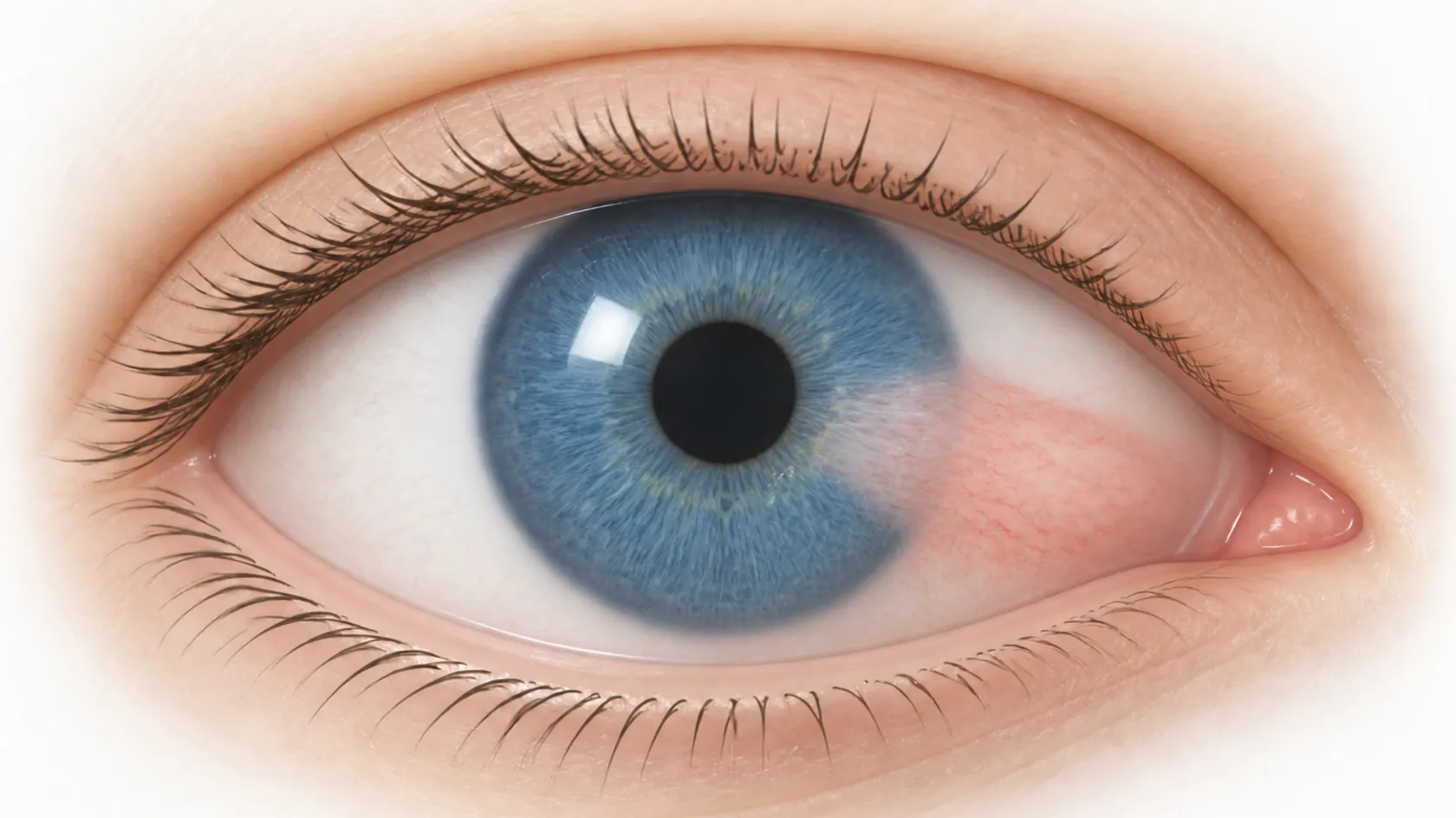
A pterygium (pronounced “tuh-RIJ-ee-um”) is a wedge of fleshy, pink tissue that grows from the white of the eye onto the cornea. It is linked to years of sun exposure, along with wind and dust, and is more common in people who spend a lot of time outdoors.
It can make the eye red, gritty, and irritated. As it grows toward the center, it can warp the cornea and cause astigmatism, and eventually block vision.
How it can be treated
- 1
Protection & comfort
Sunglasses and a hat slow growth. Lubricating drops, and short courses of anti-inflammatory drops, calm flare-ups.
- 2
Removal
When a pterygium grows toward the center, affects vision, or keeps the eye irritated, it can be removed in a short outpatient surgery.
- 3
A graft to prevent regrowth
The area is covered with a thin graft of your own surface tissue, often held with tissue glue instead of stitches, which greatly lowers the chance it grows back.
Not every bump is the same
Most surface growths are benign, but a careful exam tells them apart.
 01
Pinguecula
A yellowish bump on the white
A small, raised spot beside the cornea, also linked to sun exposure. It can get irritated but rarely needs surgery.
 02
Salzmann’s nodules
Raised bumps on the cornea
Bluish-white nodules on the front of the cornea that can blur vision. They are smoothed away with superficial keratectomy. Learn about SK
 03
Surface cancer (OSSN)
Ocular surface squamous neoplasia
A growth of abnormal surface cells that can look gelatinous or white, often with prominent blood vessels. It is treated with special drops, surgery, or both.
A growth that is changing, bleeding, or has a feeding blood vessel should be examined promptly.