

Why the nerves matter
The cornea has more nerve endings than almost any part of the body. Besides sensing touch and pain, these nerves tell you to blink, keep tears flowing, and release signals the surface needs to repair itself.
When the nerves are damaged, the surface slowly breaks down and small injuries don’t heal. Because the cornea has lost feeling, this often happens quietly, without the pain that would normally send someone to the doctor.
 Normal light
 Blue light & dye
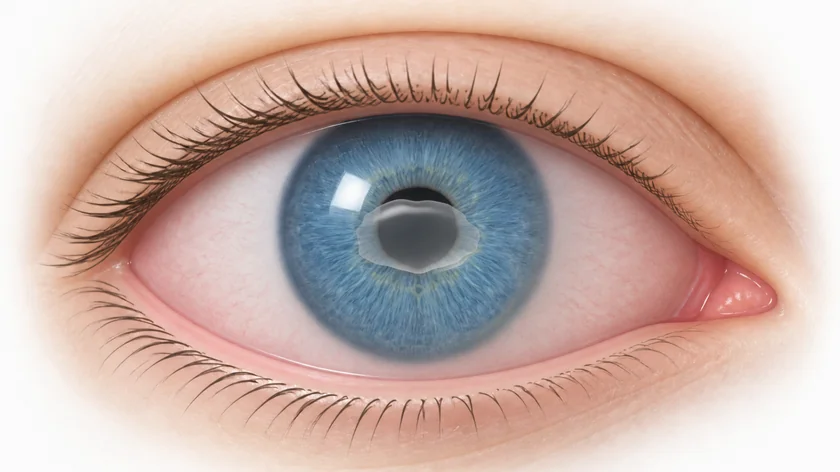
Three stages
- 1
A rough surface
The surface becomes irregular and dull, with dryness and blur.
- 2
A sore that won’t heal
An open area with rolled edges, called a persistent epithelial defect, lasts two weeks or more.
- 3
Ulcer & thinning
The cornea can thin, scar, or even develop a hole, which needs urgent care.
How it can be treated
Protect the surface
Preservative-free lubricants, and stopping any drops that may be irritating the eye.
Shield while it heals
A bandage contact lens or a thin amniotic membrane covers the sore so new cells can grow.
Healing drops
Serum tears made from your own blood, and a prescription nerve growth factor drop, can help the cornea repair itself.
Partial eyelid closure
Temporarily closing part of the eyelid protects the cornea and helps stubborn sores heal.
Advanced surgery
For severe cases, procedures can repair thinning or, in select cases, route a healthy nerve to the cornea.
Treat the cause
Managing diabetes, herpes, or shingles helps prevent further nerve damage.
Who is at risk?
- Shingles or herpes infection of the eye
- Diabetes
- Previous eye surgery, injury, or long-term use of certain drops
- Brain surgery or conditions affecting the facial nerves