

What happens in Fuchs’
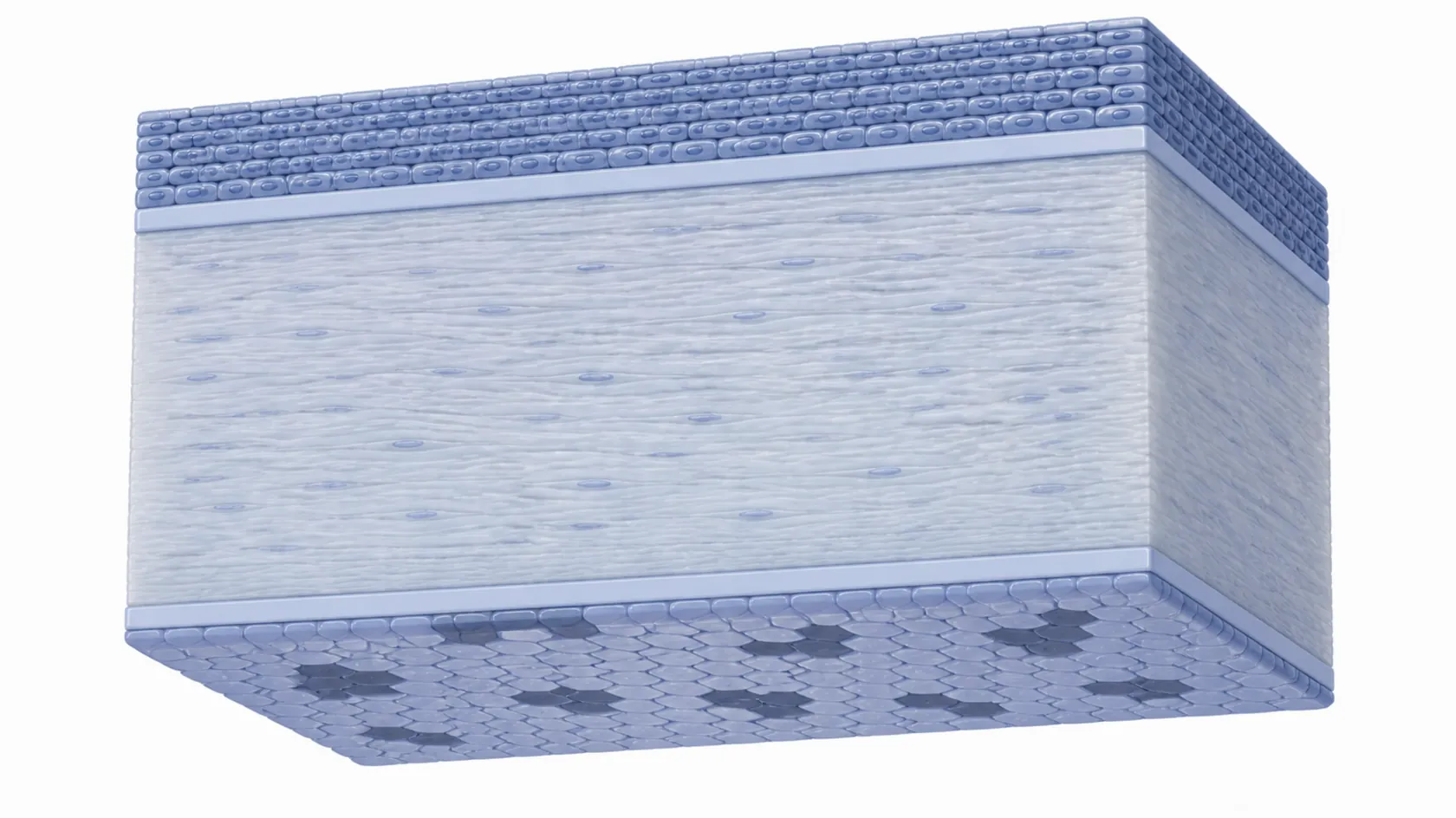
The innermost layer of the cornea, the endothelium, is a single sheet of cells that constantly pumps fluid out so the cornea stays thin and clear. These cells do not grow back.
In Fuchs’ dystrophy, small spots called guttae appear on the inner surface where pump cells have been lost, and the remaining cells gradually thin out. When too few remain, fluid builds up, the cornea swells, and vision turns hazy.
With your eyes closed overnight, less moisture evaporates from the surface, so blur is often worst on waking and clears as the day goes on.
How it progresses
- 1
Early
Spots of missing cells (guttae) are seen during an eye exam, often years before any symptoms.
- 2
Middle
Morning blur, glare and halos around lights, and colors or contrast that seem washed out.
- 3
Advanced
Blur that lasts all day. Tiny blisters can form on the surface and break, which can be painful.

 Healthy vision With corneal disease
How it can be treated
Salt drops & ointment
Hypertonic (5% sodium chloride) drops and ointment draw fluid out of the cornea and can ease morning blur in earlier stages.
Gentle airflow
Some people hold a hair dryer at arm’s length, on a cool setting, toward the open eyes in the morning to help the extra fluid evaporate.
DMEK
When vision suffers, DMEK replaces only the failed inner layers with healthy donor tissue. It is the most effective treatment for Fuchs’ today.
Learn about DMEKFuchs’ and cataracts
Fuchs’ and cataracts often show up around the same age. Cataract surgery can put extra stress on the pump cells, so planning matters. When both are present, cataract surgery and DMEK can often be done together in one visit, or in the order that best protects your vision.