

Choosing the right transplant
The cornea has five layers. Some diseases damage only the inner layers, some only the front layers, and some all of them. Modern transplants match the surgery to the problem, replacing as little as possible.
Replacing less usually means faster recovery, sharper vision, a stronger eye, and a lower chance of rejection. When a donor transplant cannot succeed, an artificial cornea may still restore sight.
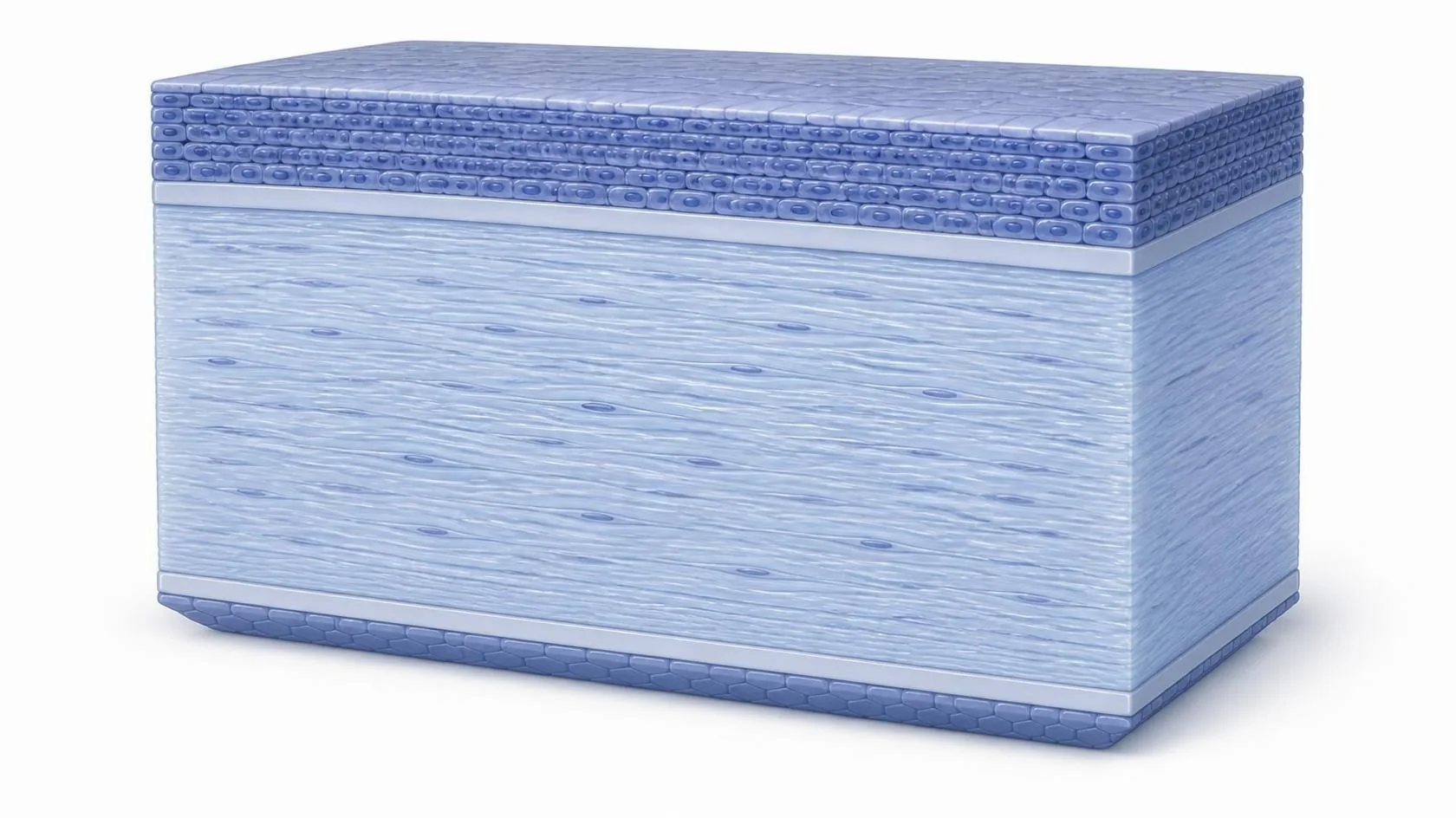
From the innermost layers to the whole cornea
Your surgeon will recommend the type that fits your cornea, your other eye conditions, and any previous surgery.
 01
DMEK
The innermost layers only
Replaces just Descemet’s membrane and the single layer of pump cells on it, most often for Fuchs’ dystrophy and corneal swelling. Typically the fastest recovery and sharpest vision. Learn about DMEK
 02
DSAEK
The innermost layers, with a thin backing
Your own Descemet’s membrane and pump cells are removed and replaced with donor ones that carry a thin layer of donor stroma behind them. Often chosen for eyes with previous surgery, such as a glaucoma tube, where a slightly thicker graft is easier to place.
 03
DALK
The front layers and most of the stroma
Replaces the surface and most of the middle layer (stroma), keeping your own Descemet’s membrane and pump cells, often with a very thin layer of your own stroma left in front of them. Often used for keratoconus and scars that don’t reach the back of the cornea.
 04
PK
Full thickness
Penetrating keratoplasty replaces every layer, held in place with fine stitches. Used when all layers are damaged. Recovery is the longest, often a year or more.
 05
Artificial cornea
Keratoprosthesis (KPro)
A clear optical device set into donor tissue, for eyes where donor transplants have failed or are unlikely to succeed. It requires close, lifelong follow-up.
Every surgery has benefits and risks. Your surgeon will explain which option fits your eyes and why.
Know the signs of rejection
Your body can sometimes react against donor tissue, even years later. Remember RSVP:
- Redness that is new or getting worse
- Sensitivity to light
- Vision that gets blurrier
- Pain or discomfort
What to expect
Donor tissue
Corneas come from generous donors through eye banks, which screen and test every cornea before it is released for surgery.
Recovery
It depends on the type: often weeks for DMEK, and a year or more for a full-thickness transplant.
Lifelong care
Steroid drops help prevent rejection, usually for months and sometimes long term, along with regular checkups.